

Share This Article
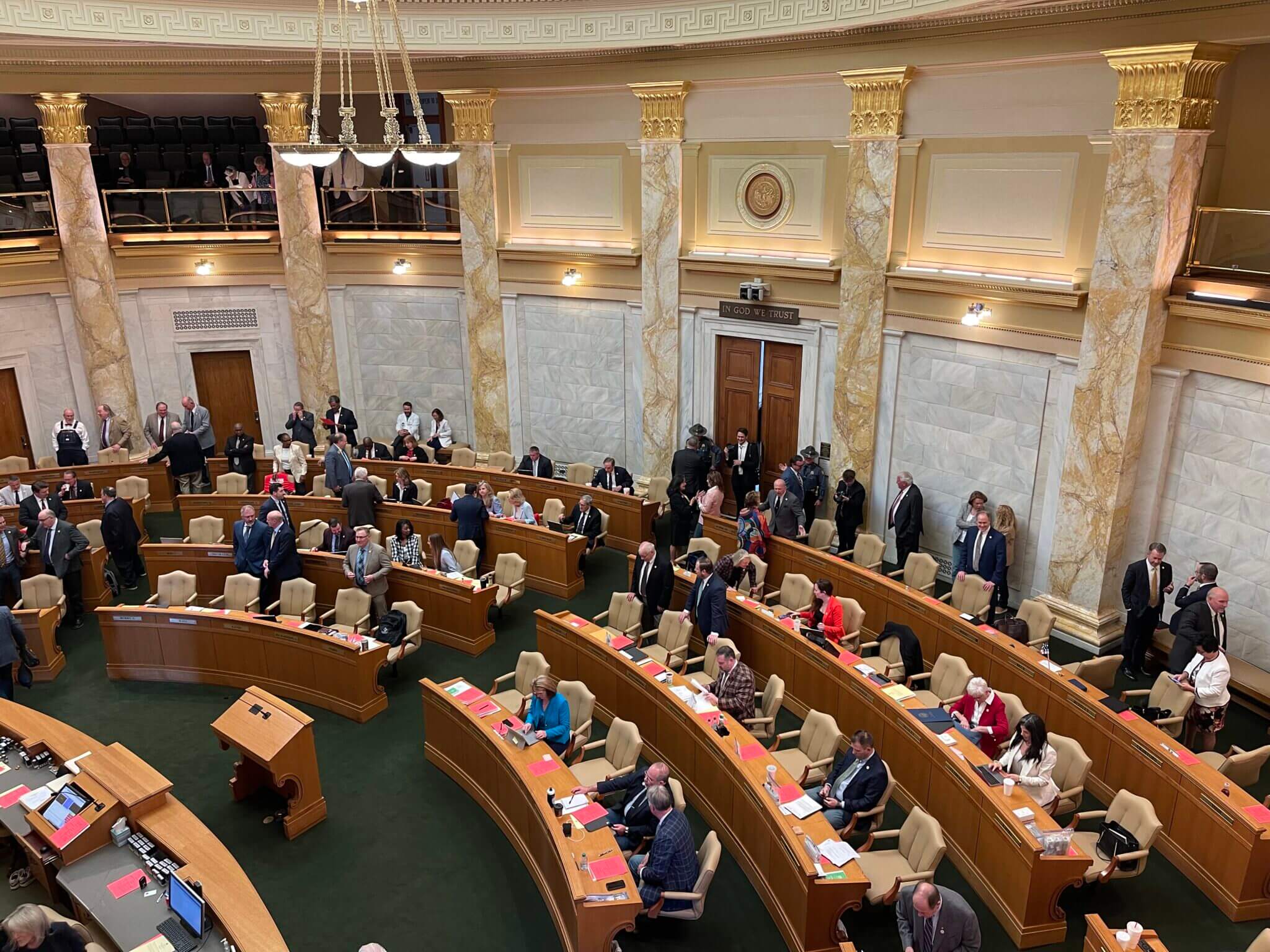
Arkansas lawmakers are gathering this week for an abbreviated session focused primarily on passing the state’s budget, including the governor’s proposal to set aside up to $379 million for school vouchers.
The fiscal session, which begins on Wednesday with Gov. Sarah Huckabee Sanders addressing the House and Senate, won’t look that different than when lawmakers gather to take up a broader range of issues.
But the rules setting up these kinds of sessions make it much more difficult to take up anything other than budget bills.
Here’s more information about fiscal sessions and what’s on tap when lawmakers convene this week:
Why does Arkansas have a fiscal session?
The General Assembly used to budget on a two-year cycle, with legislators meeting every other year in regular sessions.

But a constitutional amendment voters approved in 2008 changed that, requiring legislators to meet and approve a budget every year. Under the amendment, the Legislature meets in regular sessions in odd-numbered years when they take up a broad range of issues. In even-numbered years, the Legislature holds fiscal sessions where the focus is on the budget.

Supporters of the amendment said it was needed so lawmakers could address changes in the state’s economy, and they noted the Legislature was already meeting in special sessions and through committees in off-years.
Opponents of the change said annual sessions would be a move toward a more full-time Legislature.
Can the Legislature consider any non-budget issues?
Yes, but it’s more difficult to do so.
Any non-fiscal bills need at least a two-thirds vote in the House and the Senate to even be considered during the fiscal session. It’s not impossible, but lawmakers have historically been reluctant to open the door to a broader range of issues coming up.
How is the budget approved?
The House and Senate will consider dozens of appropriations bills, which give state agencies authority to spend money. Most appropriations bills require a three-fourths vote in each chamber to be approved.
An exception is the public school fund appropriation, which only requires a simple majority.
Toward the end of the session, legislative leaders and Sanders will negotiate details of the proposed Revenue Stabilization Act. That legislation is the funding mechanism for state agencies and prioritizes state spending based on expected revenue.
Unlike appropriations bills, the Revenue Stabilization Act only needs a simple majority in each chamber to pass.
What are the top issues in this year’s session?
Sanders has proposed a nearly $6.7 billion budget that raises spending by 3%. The proposal includes more than $309 million for school vouchers and setting aside another $70 million if needed from state surplus money for the program.
The proposal is likely to revive debate over the program and complaints from Democrats and some rural Republicans about the impact it has on public schools.
Legislative leaders have said they don’t expect and aren’t pushing for Sanders’ proposal for a 3,000-bed prison to come up, but have not ruled it out completely.
Sanders’ budget also includes $53.4 million for the state employee pay plan.
How long will the session last?
Fiscal sessions last up to 30 days, though lawmakers can extend it another 15 days beyond that with a three-fourths vote in each chamber.
Legislative leaders have said they hope to wrap up the session by the end of April, though they expect a special session immediately afterward to take up tax cuts.
How can I watch proceedings?
The House and Senate livestream their proceedings on the legislative website. Agendas for committees, as well as House and Senate floor votes are available online. The proceedings are also open to the public at the state Capitol.
Arkansas Advocate is part of States Newsroom, a network of news bureaus supported by grants and a coalition of donors as a 501c(3) public charity. Arkansas Advocate maintains editorial independence. This article was published with permission from the Arkansas Advocate. Contact Editor Andrew DeMillo for questions: [email protected]. Follow Arkansas Advocate on Facebook and Twitter.

