

Share This Article
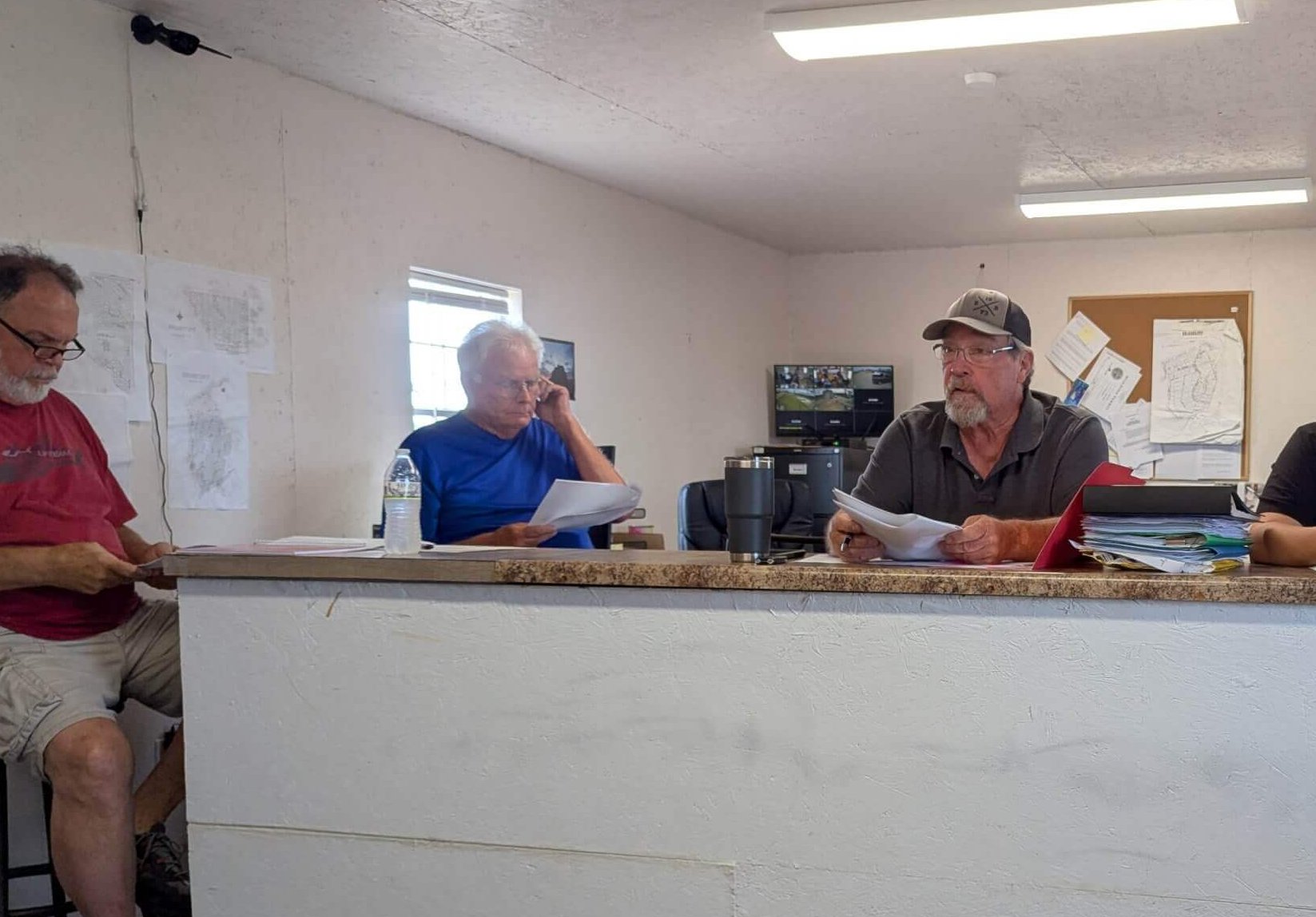
Mayor Bob Markham reported receiving harassing and threatening phone calls at Monday’s city council meeting while legal issues surrounding the town’s improvement district continue to complicate city operations.
Markham told residents at the Aug. 12 meeting that he has been receiving calls “on the verge of threatening” and has reported the incidents to the sheriff’s department. The calls appear to come from untraceable “ghost phones,” making it difficult to identify the callers.
“I do not want to have any more harassment. I will prosecute,” Markham said during his mayor’s report. “The city of Briarcliff does not need this. We all have… we’re all here to live together, and I want that to happen until we stop all this stuff.”
The mayor also addressed what he described as personal attacks, reading from anonymous letters sent to his home. One letter allegedly questioned his mental state and importance as mayor.
“Looks like you ain’t important enough, as you thought,” Markham read from one letter. The letters referenced his wife and included personal information about where he lives and what vehicle he drives.
“I don’t care what your phone number is. I don’t care where you live,” Markham said. “I don’t like being harassed.”

The harassment comes as the city continues grappling with longstanding legal issues surrounding the Briarcliff Water and Recreational Improvement District (BID), which has operated for years without properly elected commissioners as required by state law.
Building Payment Controversy Despite BID Quorum Issues
Markham reported that the city’s new building from Titan Steel remains on schedule for delivery between Aug. 12-17, despite previous concerns about payment deadlines and ongoing questions about payment authorization. He said he contacted the company to secure an extension after Debra Hughes alerted him to potential issues with the payment timeline.
“Titan steel is satisfied with what we’re doing, and I’m glad to hear that,” Markham said. “We are not going to lose this building.”
However, the building payment has become complicated by the collapse of the Briarcliff Improvement District’s governing structure. BID currently has only two members remaining— Ken Company and Connie Street, who serves as a non-voting member on BID while simultaneously serving as an active city council member. The district lost its quorum when the majority of commissioners resigned, including former chairwoman Debra Hughes.

According to state law, improvement districts require five voting commissioners to operate legally. Without a quorum, BID cannot pass resolutions or authorize expenditures.
Despite this, Markham indicated he plans to use the two remaining BID members to sign a joint check with the city to complete the building purchase. This approach may violate state statutes governing improvement district operations.
Hughes has alleged that BID never passed a resolution authorizing payment for the building. Text message exchanges obtained by the Observer show Hughes alerted Markham to potential legal issues with the purchase timeline, attempting to help resolve the payment authorization problem. However, Markham continued to refer to her as chairwoman even after her resignation.

The payment controversy is further complicated by guidance from the Arkansas Municipal League, which previously instructed the city to dissolve its joint account with BID and return control of BID funds to the improvement district. However, this transfer has been impossible due to BID’s lack of a functioning quorum.
The mayor also provided updates on FEMA assistance for levee repairs near the city pond. He said FEMA initially assessed the damage months ago when only some erosion was visible, but after heavy rains exposed culverts, the damage estimate increased by $60,000-70,000.
“Most of those culverts are totally exposed,” Markham said, warning residents to avoid driving in the area due to erosion underneath the roadway. “It could collapse.”
BID Legal Complications Continue
The meeting revealed ongoing confusion about the relationship between the city and BID, which owns much of Briarcliff’s infrastructure, including roads and the water system. An anonymous letter dated Aug. 6 from “Concerned Citizens of Briarcliff” sent to select residents detailed specific allegations about BID’s legal authority and financial operations, prompting a lengthy Facebook response from former interim mayor and treasurer Renee Schmidt-Klika.
The letter alleged that BID has been “illegally managed and controlled as part of the City of Briarcliff” since 2005, with no proper audits since 2016 and commissioners who “have sat as commissioners on the BID — posing a conflict of interest” for years. The letter claimed elections for commissioners “have not been held for years” and that BID currently lacks the minimum three elected commissioners required to conduct business legally.

The letter noted that BID was formed in 1981, predating the city’s 1998 incorporation, and alleged it has been improperly controlled by the city since 2005.
According to the letter, approximately $680,000 is being held “in limbo for the rebuild of the City offices, gym, and clubhouse” because the money “cannot be used without a legally functioning BID.”
The letter also raised questions about financial controls, noting that $1,145,118.42 was written out of the city’s general fund account to CTC and ERASSIST, and that from June 2024 through July 29, 2025, the city has not been able to locate a resolution authorizing the disbursement.
Most significantly, the letter stated that Arkansas State Legislative Audits show the city received documents from 1999 to 2022 for the City of Briarcliff, but “nothing received after 2016” for the Briarcliff Improvement District, with each audit header labeled as “Unaudited.” Unaudited audits mean that the financial paperwork needed to be turned over to the State was filed by the municipality instead of an independent auditor.

During the meeting, Markham said he intended to identify who sent the letter. “I will find out who sent these letters,” he said, though the anonymous correspondence appears to have been mailed by a private citizen exercising their right to communicate with residents about public matters.
One resident told the council the letter stated “that the BID, which is a separate entity from the city, hasn’t been operating legally” and that “the BID needs to get a full commission and commissioners.”
The resident noted that money cannot be released for city projects “and the BID hasn’t acted as a legal BID since 2005.” The resident incorrectly stated BID was formed around 2018 or 2019, when it was actually established in 1981.
“Why isn’t the BID commissioner here at this meeting?” the resident asked, referring to the head of the commission.
During the discussion, former BID Chairwoman Debra Hughes, who was in attendance at the meeting, pointed out that according to Arkansas statutes, only commissioners or the state attorney general can dissolve an improvement district, not the city council. However, BID currently lacks the minimum five voting commissioners required by law to function legally.
Past city councils have attempted to dissolve BID but failed after BID sued in response to the attempts.
The district now consists of only Ken Company and City Councilwoman Connie Street, who serves in a non-voting capacity on BID while simultaneously serving as an active city council member. The majority of commissioners have resigned, including Hughes, leaving BID without a quorum to conduct business or authorize expenditures.
“If you dissolve the BID, the assessments go away,” Hughes explained. “The city cannot assess and gather those taxes legally. The BID are the only ones that can do those assessments and give the city the assessments. If you do away with the BID, you do away with your assessments. How does the city survive at that point?”
Hughes described the situation as “very painful” and noted that “the BID was never allowed to have any of their paperwork, any of their documents, any of their checks.”
“You want the BID to go hire an attorney, you’ve got no money,” Hughes said. “You want to hire… you want to do a petition, you want to do a legal election, you have no money. You don’t even have access to the money that you’re supposed to as a BID. It’s very difficult situation.”
The lack of functioning BID governance has created additional complications beyond the building payment. The Arkansas Municipal League previously instructed Briarcliff to end its joint account with BID and return funds to BID’s control, but this directive cannot be implemented without a functioning BID commission to authorize the transfer.
Markham said he is working with a Fayetteville attorney who specializes in improvement districts through the Municipal League to resolve the legal issues.
Schmidt-Klika Disputes Letter Claims in Pre-Meeting Social Media Posts
Prior to Monday’s meeting, Schmidt-Klika posted extensive comments on Facebook on Aug. 10 defending her handling of city finances and disputing what she called “magical letters” sent to only select residents.
“So I guess only selected number of property owners/tax payers were sent these magical letters, they must be magical as I didn’t receive one,” Schmidt-Klika wrote, questioning why the letters weren’t sent to all residents if the concerns were legitimate.
Schmidt-Klika addressed several specific allegations in the letter. Regarding claims about unaudited finances, she stated that “the state gets all minutes, bank statements, financials, monthly invoices, income receipts, ordinance changes and resolutions” and that the state auditor has collected records from 2023, 2024, and 2025. This appears to contradict the letter’s claim that no BID audits have been received by the state after 2016.

However, Schmidt-Klika’s response focused on city audits rather than specifically addressing BID audit requirements. The letter alleged that while city audits continued through 2022, BID audits stopped being submitted after 2016.
Schmidt-Klika was also serving as BID’s assessor during her time in office, and her name and signature are on financial documents filed with the Baxter County Collector’s Office.

Regarding the building purchase controversy, Schmidt-Klika claimed “there is a resolution that was passed that covers the final payment on a building,” though she said she was instructed to make a $16,500 down payment “with no Resolution” and questioned whether proper procedures were followed.
Both Schmidt-Klika’s statement and the allegation made in the letter that was sent out are at odds with each other.
Schmidt-Klika also alleged that some officials had been “creating emails under assumed names and sending them to the Municipal League” and “creating multiple aliases to do Facebook posts,” suggesting coordinated efforts to undermine her credibility.
The Observer has received multiple anonymous emails over several months from various sources claiming to be Briarcliff residents and officials, including messages allegedly from Schmidt-Klika herself, someone claiming to be her mother, and someone purporting to be City Councilwoman Connie Street.

When initially contacted about early anonymous emails alleging illegal activity in Briarcliff, Schmidt-Klika denied sending emails to the Observer but later admitted to the communications during a meeting earlier this year after former Mayor Martin Nicholson’s resignation, after the Observer showed her the email address that was used.

The Observer has also received emails from the city’s official email account making similar allegations. That same official city account was reportedly used to email the Governor’s Office, prompting the Governor to contact the Attorney General, though the Observer’s FOIA request for that correspondence has not yet been fulfilled by the city.

Schmidt-Klika defended her decision to consult with the Municipal League before transferring financial records, saying she “wanted to confer with the Municipal League before just handing over a checkbook that at some point and time was going to be audited from that desk.”

“I didn’t resign because I did something wrong,” Schmidt-Klika wrote. “I was done being in the middle of decisions being made, contracts being signed and none of the protocols that certain councilpeople have been accusing me of being overlooked.”

Schmidt-Klika concluded by saying she would not address further allegations and encouraged residents to attend council meetings to see “the one telling others to shush and go back to sleep.”

Personnel Changes and Pool Operations
The mayor announced plans to hire a licensed bookkeeper to handle city finances separately from the treasurer/recorder position, pending feasibility studies. He said he’s meeting with a bookkeeper who serves Yellville and other small municipalities to explore costs.
“We are in the possibility of discussing, uh, getting a hiring on a licensed bookkeeper,” Markham said.
Markham also reported that the city pool is operational under a new maintenance worker from Texas. “I came one day and the pool’s up and running,” he said, adding he plans to keep it open through mid-September for local children.
“I keep having kids come in here right now, saying, ‘when is the pool going to open?’. I can’t say no,” Markham said.
Prisoners from Calico Rock are scheduled to clean up the levee area on Sept. 25, which should make the area more accessible for fishing and recreation.
Salary Authority Questioned
During the meeting, Markham claimed authority to handle payroll changes, stating this was approved by the Municipal League. However, according to Arkansas Code Annotated § 14-42-113, city councils have the responsibility to set the salaries of municipal officials.
The statute states that “salaries of officials may be increased, but not decreased, during the term of office, except that the official receiving the salary may request a decrease.”
The Arkansas Municipal League’s 2021 Guidebook for Municipal Officials confirms that city councils “set the salaries of the mayor, council members and other municipal officials.”
Water System Updates
The city’s water tower recently received what officials called one of the cleanest assessments they’ve seen in years. The state-required inspection found only one to three inches of sediment on the tower bottom, which is considered excellent.
“This is one of the cleanest towers they’ve seen in a long time,” Markham said.
Scuba divers cleaned the system, and all state requirements have been met. Markham said the city is working to license a second Grade 1 water system operator to provide backup coverage.
FOIA Compliance Issues
The Observer requested updates on Freedom of Information Act requests submitted to the city, particularly seeking email communications between city officials. Markham said the city is working to fulfill the requests but noted staffing limitations.
“I’m trying to run a city here. I can only do so much,” Markham said, explaining that with reduced staff, responding to extensive FOIA requests takes time. “We don’t have a recorder treasurer anymore that can get you all that stuff. Heather is tied up between water and this, and uh, a panic attack with her bless her heart.”
The Observer has filed multiple FOIA requests with Briarcliff, none of which have been fulfilled despite some being over a month old. Under Arkansas law, public records requests should be fulfilled within three business days.
Council Member Comments
City Council member Daisy Schneider spoke briefly about personnel matters and asked whether anyone had been questioned by the Attorney General about the current situation. Markham replied that he had not been contacted.
Another council member asked about missing checks and allegations of theft, though Markham said he considered those matters closed.
The meeting ended with discussion of recent changes to Arkansas sunshine laws that now allow two council members to meet socially without violating open meeting requirements, though they still cannot discuss city business.
One resident summarized the community’s frustration: “It seems like it’s always just a bunch of fussing and squabbling… as a resident that I would like to see out of the city of the BID is to follow the constitution of the state of Arkansas with the laws.”
This continues to be a developing story.

