

Share This Article
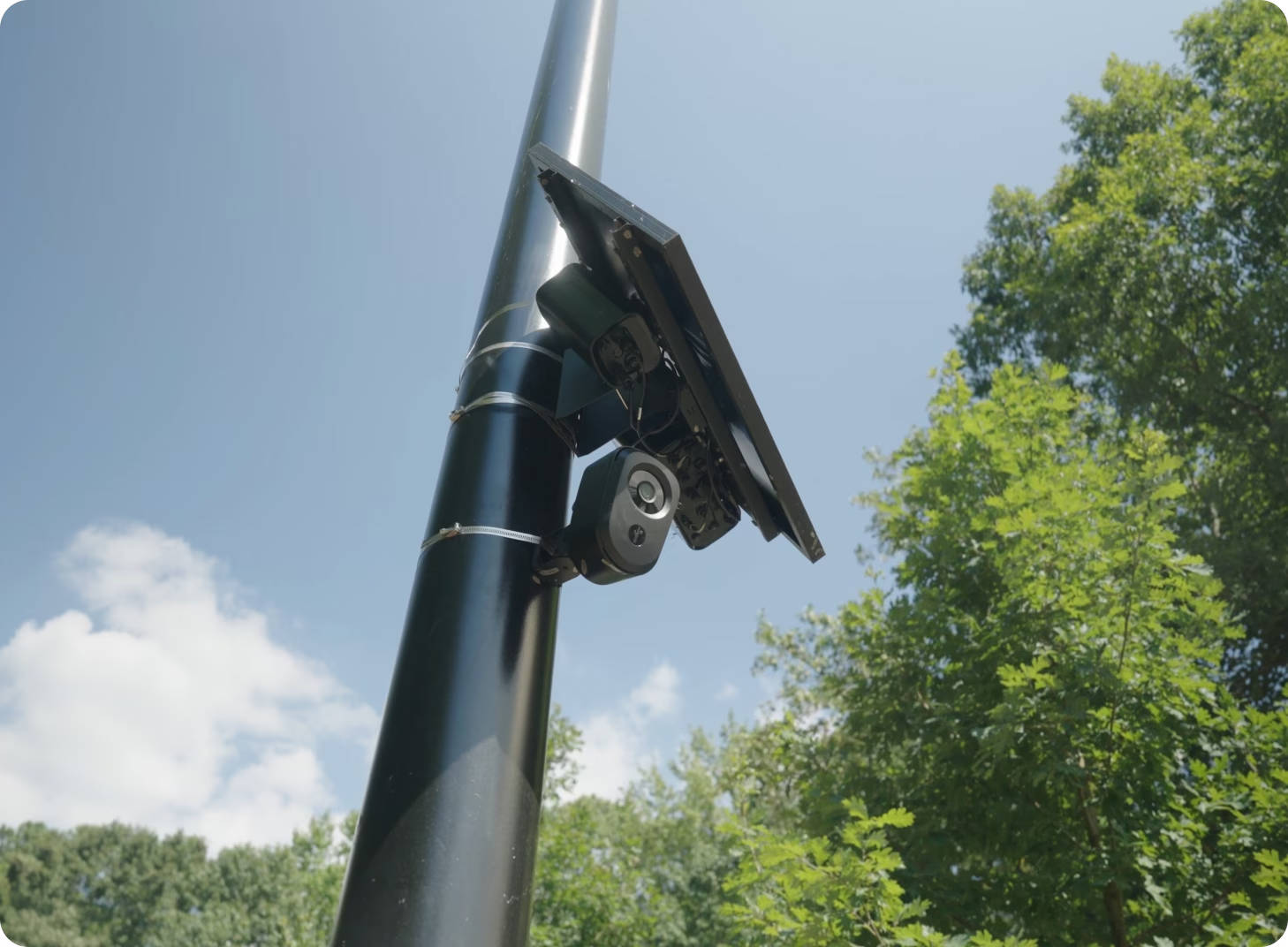
Three automated license plate readers are up around Mountain Home. Four more are coming, at the community center entrance and on the highways feeding into town. No one voted on them. There is no ordinance. Police Chief Eddie Griffin built them into his department budget, which is a legal and ordinary way to buy equipment.
I want to be clear about where I stand before I say anything else. I oppose these cameras, and my objection is not to Griffin or to the Mountain Home Police Department.
When the department first came to the City Council years ago asking for cameras that could read plates, Griffin made the case in public and took the questions. He has been straight with me every time I have asked about this, including when I called last month. He is not hiding anything.
My problem is with what the city actually bought, which is not a set of cameras. It is a subscription to a private surveillance network that Mountain Home does not own, does not run and cannot fully audit.
That distinction matters more than it sounds. If the city owned cameras outright and an officer abused them, there is a paper trail the public can reach, a chief who answers to a mayor and council, and a courtroom where a citizen can force the issue. Public accountability works because the public has leverage.
Flock Safety is a private company in Atlanta valued in the billions. It owns the hardware, holds the data, writes the search interface and decides what the audit logs show. When the question is whether the company itself is behaving, the answer comes from the company.

It also helps to be precise about what these devices collect. Despite the name, a plate reader does not just read plates. Flock’s cameras log the make, model, color and body type of a vehicle, along with distinguishing marks like bumper stickers and dents, and package it as what the company calls a vehicle fingerprint. That means a car can be found without anyone knowing its plate number.
Each read is stamped with a time and a location. String enough reads together and you have a record of where a person goes, when they go and how often. Not a suspect. Anyone who drives past the camera.
The bigger issue is that Mountain Home’s cameras are not Mountain Home’s alone. Griffin described the regional network as one of the system’s selling points, using Harrison as his example. If Harrison is looking for a vehicle and it rolls through here, Harrison gets a notification.
That is a genuine benefit. It is also the whole problem. A network that lets Harrison find a stolen truck is the same network that lets a police department a thousand miles away go looking for something else.
This is not speculation. A sheriff’s deputy in Johnson County, Texas, used Flock’s national lookup to search more than 83,000 cameras nationwide for a woman he suspected of ending her own pregnancy. She had left Texas to do it, in a state where the procedure is legal.
I am Catholic and I am opposed to abortion. I do not defend what that woman did.
But the surveillance question here is a separate one, and every reader of this paper should sit with it. A single deputy in another state reached a thousand miles into cameras that Illinois and Washington paid for, to track a private citizen over conduct that broke no law where it happened.
Nothing in the network stopped to ask whether Texas had any business searching Illinois. The cameras just answered. Reverse the politics and the machinery works exactly the same way, which is the point.
Illinois’ secretary of state opened an investigation after a suburban Chicago department turned over data to that same Texas search. Two members of Congress opened their own inquiry into the company. In February, NPR reported that reviews of audit logs by researchers and local officials found police departments running searches that appeared to be on behalf of federal immigration agents.
The individual abuses are worse. A police chief in Braselton, Georgia, was arrested after women who had sought protective orders said he used the cameras to track them and sent them maps of their own movements. A former officer in Oak Ridge, Tennessee, was indicted on more than 20 counts, most of them tied to personal use of the Flock system. A Washington Post investigation published this month counted at least 50 officers charged with or accused of misusing plate reader data, most often to follow women they knew.
Arkansas is not a bystander here. Roughly 40 law enforcement agencies in this state use Flock. Little Rock has 116 readers. In Greers Ferry, a camera sat pointed at a couple’s house until a national law firm threatened to sue. In Sherwood, a camera misread a plate by a single letter and officers stopped a driver whose car had not been stolen.
Two weeks ago, Pea Ridge shut its program down after residents packed a meeting and asked the council to do it. Their police chief had told them the cameras helped solve cases. He was probably right. They took them down anyway.
I owe the other side an honest hearing, because it has one. Courts have mostly sided with the cameras. A federal judge upheld Norfolk, Virginia’s system in January, and more than 30 courts have found that fixed plate readers on public roads do not require a warrant. Arkansas passed a law last year restricting police use of this data to legitimate purposes, capping how long agencies can keep it and barring anyone from selling it. Flock has added keyword filters, an offense dropdown and public audit portals.
Take those seriously. Then notice what they have in common. Nearly every safeguard on that list arrived after somebody got caught.
The filters blocking searches for abortion and immigration exist because of the Texas case. The audit tools got built out because journalists and city officials went digging. Arkansas’ statute is real, but a retention limit without an auditor is a promise, and I am not aware of anyone in this state checking whether Mountain Home’s data is deleted on schedule.
The Norfolk ruling deserves a closer read too. The judge leaned on the specific facts in front of him, including how many cameras there were and how briefly the data was held. That reasoning gets weaker every time a network grows, and the Supreme Court’s recent decision on location data has pushed the same question back to the appeals court.
Then there is the company’s own conduct. Flock’s chief executive spent months calling the people mapping his cameras a terroristic organization. He apologized last month, after more than 50 cities had canceled or refused contracts. I take him at his word that he regrets it. I also think an apology that arrives on that schedule tells you something about a company we are trusting with a record of our neighbors’ movements.
So here is what I am asking, and it is not that anyone rip anything out of the ground tomorrow.
Put the remaining four cameras in front of the City Council before they go up. Pass an ordinance that says in writing how long Mountain Home’s data is kept, who inside the department can search it and what reason they have to give. Publish the audit log, the way Texarkana does. Bar out-of-state and federal agencies from querying our data without a warrant. Set the whole thing to expire unless the council votes to renew it.
Griffin has never asked this town to take his word for anything. He came to the council in public the first time. The cameras deserve the same treatment, and so do the people driving past them.

