

Share This Article
Arkansas’ largest electric utility, the world’s most valuable technology company and the state’s largest newspaper spent this week fighting in federal court over a single question: who is paying for the power behind Google’s $4 billion data center in West Memphis.
The answer matters to Entergy Arkansas customers across the state, including those in portions of Baxter County the utility serves. Their bills already reflect part of the cost of a solar plant Google says it is funding.
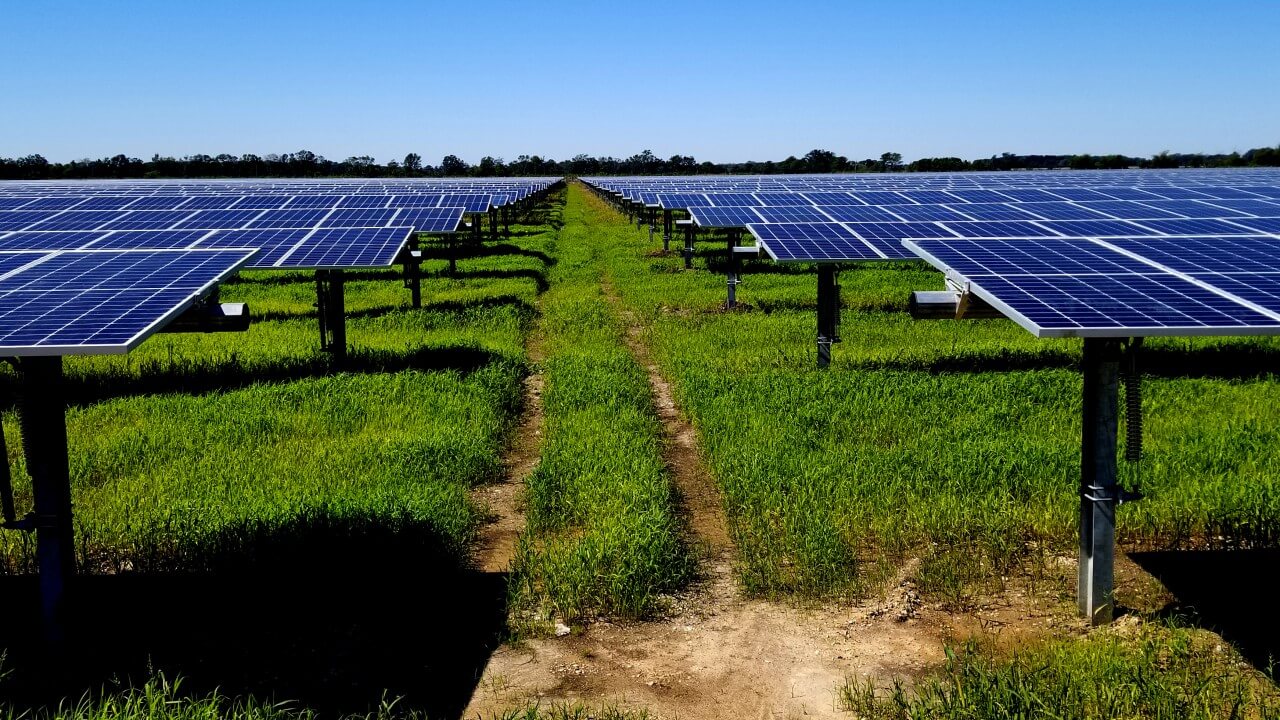
The fight began Aug. 31, when the Arkansas Democrat-Gazette reported that Google will pay Entergy $526 million toward Cypress Solar, a 600-megawatt solar field and 350-megawatt battery facility in Jefferson County priced at $1.6 billion. The newspaper’s figures came from Public Service Commission records that Jessica Kivell, a central Arkansas nurse, obtained through an Arkansas Freedom of Information Act request and shared with the paper.
Entergy and Google had said publicly last October that Google would pay rates covering the full cost of the plant. The documents showed the commission’s own staff had questioned that claim before approving the deal in December.
By the next morning, Entergy was in federal court. Its 18-page verified complaint, signed under oath by David Palmer, the utility’s vice president of regulatory affairs, asked U.S. District Judge Lee Rudofsky to bar the Democrat-Gazette, reporter Sydney Sasser, the Arkansas Times, its editor Byron Tate and Kivell from publishing anything more from the records.
The complaint went further. Entergy asked the court to order the defendants to destroy their copies, remove what they had already published from their websites and identify everyone they had shared the records with. The utility said it was not seeking damages yet but reserved the right to do so.

Entergy built its case on federal and state trade secret laws, arguing the records contained proprietary pricing that competitors could use against it. The complaint acknowledged the commission released the documents “in violation of its own interim protective order” and blamed the disclosure on the commission’s “apparent mistake.”
The words “First Amendment” and “prior restraint” do not appear anywhere in the filing. On the harm a gag order would cause, Entergy wrote that “no harm would come to defendants.”
Rudofsky heard the case the same afternoon. The hearing ran about four hours, nearly two of them behind closed doors while the judge reviewed the disputed records and Kivell testified. Palmer also testified, and the court admitted two exhibits, a commission order and the staff memo at the center of the story.
The judge described himself as skeptical from the start. He told Entergy’s lawyers they had a strong case but said the First Amendment gave him significant pause, according to the Arkansas Advocate. “It would take a lot to get me to do a prior restraint,” Rudofsky said, as reported by the Democrat-Gazette.
On Wednesday, Rudofsky denied the restraining order as to all defendants in a telephone conference, giving his reasons on the record rather than in a written opinion. According to the Democrat-Gazette, he spoke of his First Amendment concerns, avoided the question of whether the records contained trade secrets and said Kivell broke no law by asking for public records and sharing what she got back. The denial of a temporary restraining order cannot be appealed.
The parties asked for time to confer before the judge sets a briefing schedule on Entergy’s request for a preliminary injunction, so the case is not over.
Rudofsky, a Trump appointee who was nominated to the 8th U.S. Circuit Court of Appeals last month, has a standing order in every civil case inviting outside groups to file amicus briefs. Press freedom organizations that publicly urged him to deny the gag order now have an open door to enter the case.
Those groups treated the request as an attack on settled law. Seth Stern of the Freedom of the Press Foundation said after the ruling that judges should sanction litigants and lawyers who file what he called unconstitutional demands to gag journalists. An attorney for the Foundation for Individual Rights and Expression told the Advocate that once the government releases information, mistakenly or not, the complaint belongs with the government and not the newspaper.
The law they were pointing to is more than 90 years old. In 1931, the U.S. Supreme Court ruled in Near v. Minnesota that stopping a publication before it prints is the most serious form of censorship the Constitution forbids, allowed only in the rarest cases such as troop movements in wartime.
The rule was tested in 1971 when The New York Times and The Washington Post began publishing the Pentagon Papers, a secret Defense Department history of the Vietnam War leaked by a former analyst. The Nixon administration went to court and won temporary orders halting the stories. Within two weeks the Supreme Court ruled 6-3 in New York Times Co. v. United States that the government had not met the heavy burden required to justify a prior restraint, and both newspapers resumed publishing.
The government in that case argued national security. Entergy is arguing trade secrets, and it is asking a federal court to do what the Nixon administration could not.
The closer precedent may be a 1989 case, Florida Star v. B.J.F. A sheriff’s office mistakenly placed a rape victim’s name in a public press room, a newspaper printed it and the victim sued. The Supreme Court ruled the newspaper could not be punished for publishing truthful information it obtained lawfully from the government, even though the government never should have released it.
That is the situation here. The Public Service Commission handed the records to a citizen who asked for them under state law, and Entergy’s own complaint says the defendants got them only through the commission’s “apparent mistake.”
Entergy still accuses all five defendants of misappropriation, the legal term for trade secret theft. But its theory is not that anyone took the records. It rests on a provision of trade secret law covering information “acquired by accident or mistake,” and it argues the wrong was publishing the records after its lawyer’s Aug. 31 email warned they had been released in error. Under Florida Star, that warning is exactly what the Supreme Court said cannot turn lawful publication into a punishable act.
Democrat-Gazette Executive Editor Lee Wolverton said the case was “first, foremost and in its entirety about the First Amendment.” Arkansas Times Editor Austin Gelder said the ruling showed courts will not step in to shield powerful interests from embarrassing disclosures. The Times was sued even though it says it never had the documents.
Entergy lost in court and immediately opened a second front. Hours after the ruling, the utility posted a statement accusing the Democrat-Gazette of “a serious and careless mathematical error” and demanding an immediate retraction given the same prominence as the original story.
The utility’s argument is that the $526 million figure counts only one year of Google’s payments. The contract calls for $443 million in accelerated payments plus $83 million a year in minimum demand payments over a 20-year term, which Entergy says totals about $2.1 billion. The utility also says Google contributes to fixed costs “so that other customers pay less” and faces termination penalties designed to protect them.
“Google is paying for 100% of its power needs and more,” the statement said.
Google backed that account. Spokesperson Jessica Ryan said the upfront payments total $526 million but that monthly rates over the 20-year agreement “will completely fund our operational footprint.” Both companies say the deal will lower overall system costs and deliver more than $1.1 billion in net benefits to other Arkansas customers.
The Democrat-Gazette has not backed off. In a statement reported by KARK, the paper said the $526 million figure came straight from the records and that Entergy never asked where it came from before accusing the paper of bad math.
“The number, in other words, was not the product of the Arkansas Democrat-Gazette performing calculations,” the paper said. “Independent of us, Google repeatedly has cited the same figure of $526 million to other news outlets as well as to the Arkansas Democrat-Gazette. Entergy, in fact, performs calculations in its statement that we have not seen substantiated by the records.”
In a follow-up story Thursday, the paper reported that the records describe the $526 million as Google’s contribution and that the contract specifically did not classify it as a contribution in aid of construction, which is the standard way a customer pays for infrastructure built to serve it. The paper reported that the commission’s own staff read the deal the same way before it was approved.
The paper also pointed to timing. Entergy refused to answer its questions before the original story ran Monday and offered the 20-year explanation only on Wednesday afternoon, after losing in court. Whether Entergy gave regulators a different answer last fall is not publicly known, the paper reported, because most of the commission’s Nov. 17 hearing was closed, 24 of the 80 pages in the commission’s approval order are redacted and every page of the contract the paper obtained earlier was blacked out.
Wolverton said the paper will keep pursuing the story. “We will relentlessly pursue the facts,” he said. “That is our right, our responsibility and our calling, and no one will sway us from it.”
The two sides do not actually disagree on the numbers. They disagree on what the numbers mean, and the commission’s staff raised that exact question before the deal was approved.
When a utility builds a plant, the cost goes into its rate base, and customers pay a return on that investment through their bills for decades. A customer contribution toward construction is normally subtracted from the rate base, lowering what everyone else pays. According to the Democrat-Gazette, the Google contract specifically says Google’s payments will not be treated that way.
In a document prepared for the November hearing, commission staff suggested commissioners ask Entergy’s finance director whether the payments were classified to avoid reducing the rate base. Staff also asked why Entergy had told the public Google would pay rates covering the plant’s cost when the utility’s own filings showed Google paying well below the full cost.
The $83 million a year that Entergy counts toward the plant is a minimum demand charge, the kind of bill any large customer pays for electricity. Whether 20 years of power bills amount to paying for a power plant is the dispute.
Timing sharpens it. The Democrat-Gazette reported that Entergy residential customers began paying an added $5.77 a month in June to cover three new generation projects, Cypress Solar among them. Google will not begin drawing power until February 2027 and will not reach full load, up to 600 megawatts, until October 2029. Cypress Solar itself is not scheduled for completion until late 2028.
The companies’ message has also shifted. In October, Entergy said Google “will pay rates that cover the cost of this resource,” meaning the plant. This week, both companies are making a different claim: that Google’s 20 years of payments will lower overall system costs and produce $1.1 billion in net benefits for other customers.
Those are not the same promise. A large customer that pays its full cost of service can lower everyone else’s rates by spreading the utility’s fixed costs across more electricity sold, and rates can rise for construction and still be lower than they would have been otherwise. But that benefit arrives over two decades, while the rider hit residential bills in June, and it depends on assumptions in Entergy’s regulatory filings that remain sealed.
Keeping the full $1.6 billion in the rate base also matters to Entergy’s shareholders. Utilities earn a regulated return on their rate base, so every dollar of Google’s money classified as revenue rather than a construction contribution is a dollar Entergy earns a return on. The commission staff’s question about whether the payments were structured to avoid reducing the rate base goes to exactly that point, and Entergy’s answer is not public.
Google’s parent company, Alphabet Inc., reported a $132 billion profit last year. Entergy Corp. reported $1.76 billion. If Google breaks the contract, it faces a termination fee of about $2 billion, guaranteed by Alphabet.
The records fight has a longer history. Sasser first requested the contract in June and was refused, and the newspaper sued the commission. A Pulaski County judge dismissed that case July 28, ruling it belonged before the commission itself, which then told the newspaper it would no longer answer its questions.
Kivell’s separate request produced what the newspaper’s lawsuit could not. The commission has not explained how records it had fought to keep sealed a month earlier ended up in a citizen’s inbox.
The dispute lands as data centers face growing resistance across Arkansas, with several communities passing moratoriums or new restrictions over energy use and secrecy. For Entergy customers in Baxter County and everywhere else in its territory, the answer to who pays for Google’s power will show up on their bills for the next 20 years, whichever way the court rules on who is allowed to report it.

